
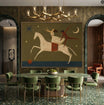
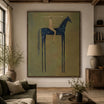
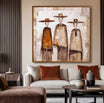
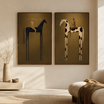



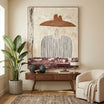

Large western wall art can bring character to a modern room without making the space feel like a themed ranch. The key is to choose the kind of western story the room needs first, then consider how the composition relates to the wall. A lone rider creates a different atmosphere from a close horse portrait, an open desert, or a quiet figurative scene.
At Tactile Atelier, western subjects appear in hand-painted canvas works with visible texture, tonal variation, and depth. This guide focuses on the decisions that are specific to western art: subject, narrative, movement, visual direction, and the balance between western character and a contemporary interior.

A single western artwork can establish the room's character while the furniture and accessories remain restrained.
What Makes a Painting Feel Western?
Western art is not limited to paintings of cowboys. Its visual language can include riders, ranch life, desert terrain, frontier figures, open skies, working animals, and the sense of distance associated with the American West. Some works tell a recognizable story. Others use a silhouette, an earth-toned palette, or a sparse landscape to suggest the subject more quietly.
It also helps to distinguish western art from equestrian art. Equestrian art places the horse, its movement, or riding culture at the center of the image. Western art may include a horse, but often gives equal importance to the rider, the land, or a broader story of solitude, work, and travel. The categories overlap, yet they do not create the same effect in a room.
Choose the Kind of Western Presence You Want
Before comparing colors or frames, decide what should command attention. The subject determines whether the painting feels energetic, intimate, expansive, or narrative.
Horse-centered art: movement and form
Choose a horse-centered composition when the animal's shape, movement, or expression matters more than a detailed western story. A single close figure can feel poised and sculptural. Repeated horses or a herd bring rhythm to a long wall. A loosely painted horse can also bridge western and contemporary interiors because it suggests the theme without illustrating every detail.
If you need to compare poses, direction, and the visual difference between one horse and a group, the guide to choosing horse artwork for your home covers those questions in greater depth.

Repeated horse forms create energy, while a consistent background keeps the large composition visually organized.
Cowboys and riders: character and narrative
A cowboy or rider introduces a human point of view. A small rider surrounded by open land can suggest distance, independence, or solitude. A closer figure feels more personal and direct. Scenes that show a rider actively guiding a horse tend to feel more narrative than a static portrait, making them well suited to living rooms, studies, and dining areas where viewers can spend time with the image.
Look beyond the subject label and examine the relationship between person, horse, and landscape. When the figure occupies only a small part of the canvas, the environment becomes the story. When horse and rider fill most of the frame, gesture and partnership take priority. That distinction has more influence on the mood than whether the palette is brown, blue, or neutral.
Desert and ranch landscapes: space and atmosphere
Open landscapes offer the most understated route into western style. Long horizons and broad skies can make a wide wall feel more expansive, while desert color and distant ranch elements carry the western reference without a dominant figure.
This approach is especially useful when a room already contains leather, timber, woven textiles, or other rustic materials. A quieter landscape prevents those elements from competing with another literal western motif.
Western figures and symbolic scenes: mood over realism
Not every western composition needs to document ranch life. Surreal figures, fragmented silhouettes, and symbolic animals can express memory, freedom, endurance, or isolation. These works often fit modern interiors particularly well because the western reference is present, but the image remains open to interpretation.
Read the Direction of the Scene
Large art affects how the eye moves through a room. A rider traveling toward the center of a composition can feel contained and calm. A horse or figure moving toward an edge creates more tension and momentum. Neither is inherently better, but the wall should give that movement somewhere to go.

When possible, position a strongly directional figure so it faces into the room rather than toward a nearby corner, door frame, or cabinet. On a wall beside an entry, an inward-facing rider can visually welcome the viewer. Above a sofa, a centered or balanced scene usually feels steadier, while an asymmetrical rider can work if open space in the painting relates to open space in the room.
Also notice the horizon. A low horizon gives the sky visual authority and can make the room feel airy. A high horizon emphasizes land, texture, and activity. Close-cropped figures remove the sense of distance altogether and create a stronger, more immediate focal point.
Modern Western or Traditional Rustic?
Traditional rustic western interiors often combine aged leather, dark wood, iron, woven patterns, and recognizable ranch motifs. Modern western rooms edit that vocabulary. They may use one substantial western painting, a warm neutral palette, and a few natural materials while keeping the architecture and furniture clean.
For a contemporary result, look for a clear focal subject, controlled color, and enough negative space for the image to breathe at a large scale. Visible brushwork can add warmth and depth without requiring extra ornament around the painting.
Avoid repeating every visual cue from the artwork in the room. Cowboy figures, hide patterns, horseshoes, rope details, distressed signs, and heavy rustic furniture become theatrical when used together. Let the art carry the identity, then echo one material or one color elsewhere. A saddle-brown leather chair, charcoal lamp, or clay-colored textile is usually enough.
Fit the Composition to the Wall
Start with the wall's shape rather than a predetermined art size. Wide rider scenes, herds, and open landscapes naturally suit walls above sofas, beds, sideboards, and dining tables. Vertical portraits work better on narrow walls, beside cabinets, or at stair landings. A square composition gives a centered horse or paired figures a stable visual boundary.
Measure the usable display area after excluding doors, windows, sconces, molding, and furniture. Then mark the proposed outside dimensions with low-tack painter's tape. View the outline from the room's entrance and from the seat used most often. This simple test shows whether the work has enough presence and whether the scene will remain legible at the main viewing distance.
Preview the complete installed footprint. Include the frame when buying a framed work, and include the spaces between panels when considering a diptych or triptych. For detailed sofa proportions, hanging height, and general room measurements, refer to the large wall art living room guide. Here, the western-specific question is whether the subject still reads clearly from across the room: a detailed ranch scene often needs more visual space than a bold horse silhouette of the same outer size.
Work With Western Color and Texture
A western palette extends beyond brown. Sand, ochre, clay, rust, dusty blue, charcoal, cream, and muted green can all recall open land and natural materials. Instead of matching every shade to the furniture, create one or two deliberate connections.

In a pale neutral room, rust or ochre can add warmth. Against dark leather or timber, areas of cream, sand, or open sky provide relief. If a painting contains a strong mustard, red, or blue accent, repeat it once in a textile or small object rather than throughout the room.
Texture changes how these colors behave. Raised brushwork and tonal layering catch side light, reveal variation at close range, and give a large surface more life than flat color alone. Check the intended wall in both daylight and evening light. Direct glare can hide dark figures and flatten surface detail, while soft side lighting tends to reveal the painted texture.
Select the Right Canvas Presentation
Confirm the presentation offered for the individual artwork before measuring or planning installation.
- Rolled canvas arrives without a stretcher or outer frame and requires professional stretching or framing before display.
- Stretched canvas is mounted over a wooden stretcher. Without an outer frame, its clean edge often suits a streamlined modern western room.
- Framed stretched canvas adds an architectural boundary and more visual weight. It can help a large work relate to dark furniture, window frames, or other structural lines.
Black can sharpen a pale or graphic image, while a warm wood tone can support clay, sand, or leather colors. The available presentation may differ by artwork, so compare the exact product options rather than assuming every finish or custom dimension is available.
Make the Final Choice
The best large western art is not automatically the most literal or the largest. It is the work whose subject supports the room's mood, whose internal movement makes sense on the wall, and whose scale allows the image to hold its presence from the normal viewing distance.
Begin with the subject: horse, rider, western figure, or open landscape. Then compare visual direction and the balance between figure and setting. Finally, test the finished dimensions and presentation against the room. When you are ready to see these approaches together, browse the Cowboy Art collection. If scale or format remains uncertain, share the wall dimensions and a straight-on room photo with the team for guidance based on the selected artwork.
FAQs
What is the difference between western art and equestrian art?
Equestrian art centers on the horse, its movement, or riding culture. Western art can include horses but more broadly draws on riders, cowboys, ranch life, desert landscapes, frontier figures, and the visual language of the American West. One painting can belong to both categories.
Can large western wall art work in a minimalist home?
Yes. Choose one composition with a clear subject, controlled palette, and generous negative space. Keep other western motifs limited so the painting becomes the room's main expression of the style.
Which western subjects work best on a wide wall?
Open landscapes, moving riders, herds, and horizontally arranged figures make natural use of a wide format. A close portrait can also work when the composition includes enough surrounding space to avoid feeling cramped.
Should western canvas art be framed?
It depends on the work and the room. Unframed stretched canvas has a quieter, contemporary edge, while framed stretched canvas adds definition and weight. Rolled canvas is appropriate when you plan to arrange stretching or framing locally, but it is not ready to hang on arrival.
How do I choose between a cowboy scene, horse art, and a desert landscape?
Choose a cowboy or rider scene for narrative and character, horse art for movement and expressive form, and a desert landscape for openness and a subtler western reference. Consider viewing distance as well: bold forms read quickly from across a room, while detailed figurative scenes reward a closer view.


Leave a comment
This site is protected by hCaptcha and the hCaptcha Privacy Policy and Terms of Service apply.