
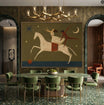
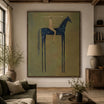
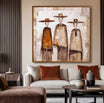
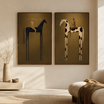


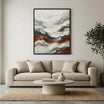
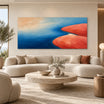
Cowboy and horse art can place the animal, the rider, or the relationship between them at the center of the image. That distinction matters more than style labels alone. A close horse portrait draws attention to form and expression. A lone cowboy introduces character and implied narrative. A mounted figure crossing open land makes distance, partnership, and the western setting part of the story.
Before comparing color or size, decide what you want to notice first. This guide explains how horse-led, rider-led, and shared-story compositions differ, what each communicates, and how to choose one that feels natural in a modern interior.

A restrained interior allows the figures and their relationship to establish the western character of the room.
First Decide What Should Lead the Picture
Paintings of cowboys and horses often contain similar subjects but create very different experiences. Use the visual hierarchy—the order in which the eye notices the elements—to identify the right direction.
Horse-led art: form, presence and movement
In a horse-led composition, the animal remains the clear focal point even when a rider or landscape is present. Scale, contrast, detail, or placement gives the horse more visual weight. The viewer responds first to its posture, silhouette, expression, or movement rather than to a specific western event.
This direction suits someone who values equestrian character but does not necessarily want the room to tell an overt cowboy story. A single horse can feel sculptural and contemplative; repeated horses create rhythm; a running figure introduces energy. Minimal or surreal treatments can make the subject especially compatible with calm contemporary, organic modern, or wabi-sabi spaces.
When the horse should remain the emotional and visual center, compare the hand-painted works in Horse Paintings.

Negative space and a simplified horse form create presence without turning the interior into a western-themed room.
Rider-led art: identity, character and narrative
Rider-led art makes the human figure the main source of meaning. Clothing, stance, scale, gesture, or the direction of travel may suggest solitude, resolve, work, freedom, or adventure. The horse supports that narrative, but the viewer is invited to imagine who the figure is and where the scene is going.
A close or centrally placed cowboy feels direct and iconic. A small rider beneath a broad sky feels more reflective because the landscape appears larger than the individual. Several riders can suggest shared purpose or ranch activity, while a lone rider usually creates a quieter, more cinematic mood.
Choose this direction when western character matters more than equestrian study. For compositions centered on cowboys, riders, and frontier-inspired figures, the Cowboy Art collection is the more relevant path.
Shared-story art: partnership and a sense of place
In a balanced cowboy and horse painting, neither figure functions as background decoration. The distance between them, their relative scale, and the direction of their bodies establish the relationship.
- Close partnership: A rider beside or close to a horse feels personal and grounded. The scene can suggest trust, pause, or companionship.
- Mounted solitude: One rider and horse surrounded by open land emphasizes independence, distance, and quiet movement.
- Ranch action: Multiple figures, crossing paths, or compressed spacing creates energy and a stronger sense of work or event.
- Open-landscape journey: Small figures moving through a large setting make terrain, weather, and destination as important as the subjects themselves.
This is the most explicitly western of the three directions. It works best when you want the artwork to communicate not only admiration for horses, but also a relationship, journey, or way of life.
Cowboy, Western and Equestrian Art: Where They Overlap
Equestrian art concentrates on the horse, riding, and the animal's physical presence. Cowboy art is figure-led and draws meaning from western identity. Western art is the broadest category: it can include both, as well as ranch life, frontier figures, desert landscapes, open terrain, and symbolic or surreal interpretations of the American West.
The boundaries are flexible, but the distinction helps when shopping. A horse portrait against an abstract ground may feel equestrian without appearing western. A distant mounted cowboy may be unmistakably western even though the horse occupies very little of the canvas. Cowboy horse art sits between the two when animal, rider, and setting all contribute to the image.
Read the Relationship, Not Just the Subject
Two works can contain the same cowboy and horse yet communicate opposing moods. Look at how the figures relate before choosing by palette.
Relative scale
A large horse beside a smaller figure emphasizes the animal's strength and presence. A dominant cowboy portrait makes identity the central subject. When both figures are small within a wide landscape, the painting becomes less about portraiture and more about space, journey, or isolation.
Distance and contact
Physical closeness suggests partnership. Space between the figures can imply waiting, separation, or an unfolding action. A rider looking toward the horse creates a visual exchange; figures looking in the same direction create a shared destination. These small cues often determine whether a work feels intimate or cinematic.
Direction and visual tension
Parallel movement feels purposeful and calm. Opposing directions add tension or activity. A still horse beside a moving figure can create a moment of pause. Consider where this movement points after the work is hung: a strong directional figure often feels most natural when it leads the eye into the room rather than immediately toward a nearby corner or doorway.

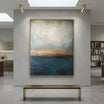
Surreal scale and an open setting can turn a familiar western subject into a more atmospheric narrative.
Choose a Visual Language That Fits Your Interior
The subject does not require one decorating style. Treatment determines whether the work feels traditional, contemporary, restrained, or expressive.
Realistic and narrative
Recognizable riders, tack, ranch activity, and natural landscapes give the clearest sense of western storytelling. Detailed work rewards a closer viewing position and can connect naturally with wood, leather, wool, stone, and warm neutral colors. In a cleaner room, the same detail can provide deliberate contrast.
Modern figurative
Simplified bodies, altered proportions, cropped figures, or unexpected backgrounds preserve the cowboy-and-horse relationship while reducing literal detail. This is often the easiest option for a contemporary room because the narrative remains legible without relying on rustic decoration.
Minimal or surreal
Negative space, muted transitions, unusual scale, and dreamlike settings shift attention from event to atmosphere. These works suit interiors that rely on quiet materials and a limited palette. The western reference is present, but it does not dominate every object around it.
Expressive and color-led
Stronger color, repeated forms, visible brushwork, or heightened contrast creates more immediate energy. This direction works well when the painting must hold its own on a large wall or enliven neutral furnishings. Rather than matching every color, repeat one restrained accent elsewhere and let the artwork retain its individuality.

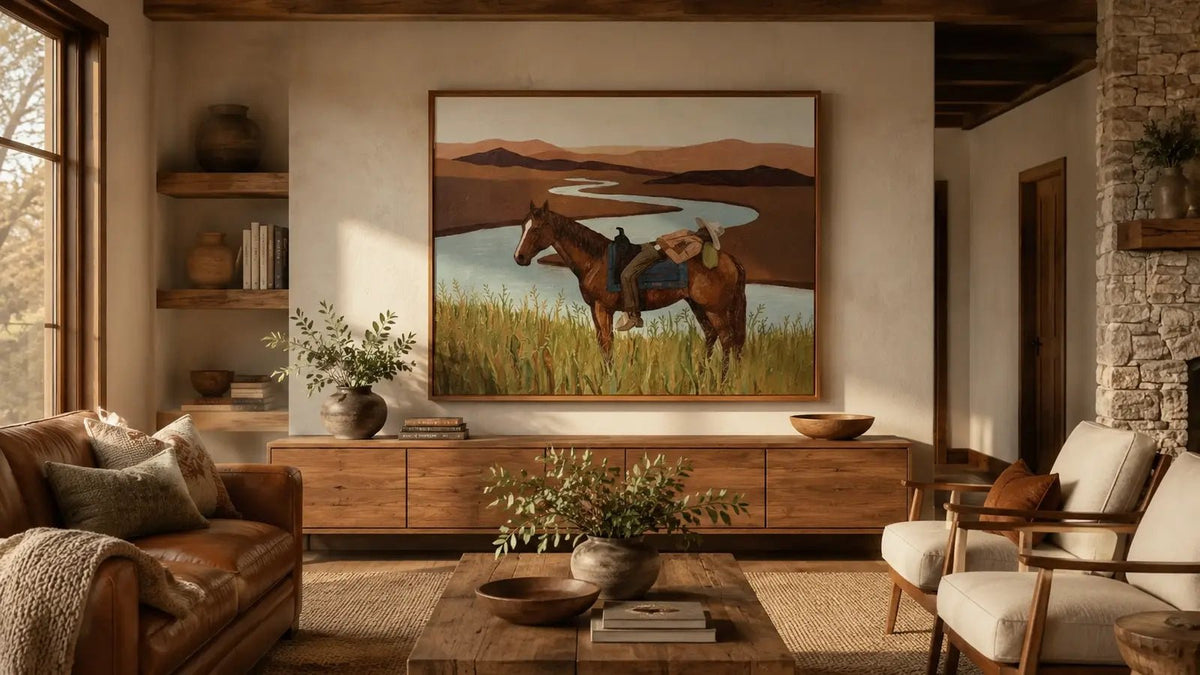
A simplified room supports the western atmosphere while leaving the artwork as the primary narrative element.
Keep the Room Western, Not Themed
Let the artwork carry most of the identity. A cowboy and horse scene does not need to be surrounded by horseshoes, rope, hide patterns, distressed signs, and other literal references. One or two material relationships—such as warm wood, leather, wool, linen, or dark metal—are usually enough.
The same restraint applies to color. Sand, cream, clay, ochre, rust, charcoal, dusty blue, and muted green can connect the work to the room without recreating a complete western palette. If the image is detailed or active, keep nearby accessories quieter. If the composition has generous negative space, it can comfortably sit beside more tactile furnishings.
Confirm Scale and Finish After Choosing the Story
Scale should support the composition rather than compensate for an uncertain subject choice. Once you know whether the horse, rider, or landscape should lead, mark the proposed finished dimensions on the wall with low-tack painter's tape. Check the outline from the room's main entrance and usual viewing position. Include the outside frame dimensions, or the full arrangement width and planned gaps if the work has multiple panels.
A frameless stretched canvas gives western imagery a clean, contemporary edge. A framed canvas adds definition and visual weight. Hand-painted texture, tonal layering, and surface variation are often most visible under gentle side light; strong direct glare can reduce darker detail. Available sizes and selected finish options depend on the individual artwork, so confirm them on the product page or ask the team to compare options using your wall dimensions or a straight-on room photo.
If you need a more detailed comparison of horse pose, direction, and figure count, use the separate guide to choosing horse artwork. Keeping those decisions in one specialist guide avoids turning every western-art article into the same general sizing and placement tutorial.
A Focused Checklist Before You Choose
- What should you notice first: the horse, the cowboy, or the setting?
- Does the relationship feel intimate, solitary, active, or journey-led?
- Do relative scale and spacing support that mood?
- Should the work feel realistic, modern figurative, surreal, or expressive?
- Does its internal movement lead naturally into the room?
- Can the artwork establish western character without extra themed decor?
- Have you previewed the complete finished dimensions and confirmed available options?
Find the Right Balance of Horse and Western Character
The best cowboy and horse art makes its hierarchy clear. Choose a horse-led work when form, movement, or equestrian presence matters most. Choose a rider-led work when character and implied story should dominate. Choose a balanced western scene when the partnership, landscape, and journey are inseparable.
Begin by comparing horse-focused compositions, then judge whether adding a rider strengthens the feeling you want or changes the story too far. If scale, format, or artwork direction remains uncertain, share your wall dimensions or a room photo with the Tactile Atelier team for a more considered comparison. Free global shipping, secure payments, and a 30-day risk-free return policy provide additional reassurance when you are ready to choose.
FAQs
What is the difference between horse-led and rider-led art?
Horse-led art gives the animal the greatest visual weight through scale, placement, contrast, or detail. Rider-led art uses the cowboy or mounted figure as the main source of character and narrative, even when the horse remains prominent.
What makes a cowboy and horse painting feel western rather than equestrian?
A western work usually includes a stronger sense of place, identity, or narrative through riders, ranch life, open terrain, frontier references, or a journey. Equestrian art may focus on the horse's form and movement without those broader western cues.
Can paintings of cowboys and horses work in a modern home?
Yes. Look for simplified figures, a controlled palette, clear visual hierarchy, or generous negative space. Limit surrounding western accessories so the artwork provides the character while the room remains contemporary.
Should the cowboy or horse face into the room?
It is often visually comfortable when a strongly directional figure leads the eye into the room, but it is not a fixed rule. Consider the complete composition, nearby architecture, and whether the intended mood is arrival, departure, pause, or movement.
Is a cowboy and horse painting better framed or frameless?
A frameless stretched canvas generally feels lighter and more contemporary, while a frame adds definition and visual weight. The best choice depends on the artwork, its finished size, the surrounding materials, and the options available for that individual piece.



Leave a comment
This site is protected by hCaptcha and the hCaptcha Privacy Policy and Terms of Service apply.