
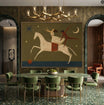
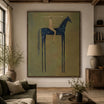
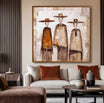
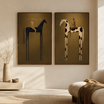


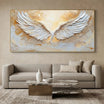




Horse artwork can bring movement, strength, and a recognizable natural subject into a room. A standing horse may feel composed and steady, while a running herd introduces speed and direction. Rider scenes add narrative, and simplified horse forms can work in interiors that do not follow a traditional western style.
The most useful way to choose a piece is to look beyond color alone. Consider the horse’s pose, the direction it faces, the amount of open background, the number of figures, and the shape of the canvas. At Tactile Atelier, hand-painted canvas art uses visible brushwork, tonal layering, and surface variation to give figurative subjects a physical presence on the wall.

How to Choose Horse Artwork by Pose and Direction
The horse’s posture establishes the mood before the viewer notices smaller details.
A standing horse creates a stable silhouette. The legs and body are easy to recognize from a distance, making this type of composition useful when the artwork will be seen from across a living room or through an open doorway. A side profile tends to emphasize the length of the body, while a front-facing horse gives more attention to the head and expression.
A walking horse introduces movement without making the room feel highly energetic. One raised leg or a slight turn of the body can make the composition feel natural and unforced. This quieter movement can suit bedrooms, reading areas, or offices.
Running horses create a clear horizontal direction. Extended legs, flowing manes, and repeated figures lead the eye across the canvas. They usually need more space around the front and back of the animals so the movement does not feel compressed.
A rearing horse creates a taller and more dramatic form. Because the body moves upward, this pose can suit a vertical canvas or a wall with generous height. The composition already contains considerable energy, so a simple background often provides better balance than a detailed landscape.
The direction of the horse matters when choosing placement. A figure facing toward the center of the furniture arrangement often feels more connected to the room. A horse facing the nearest edge can still work, but it should have enough open canvas ahead of it so the animal does not appear crowded against the frame.
Compare a Single Horse, a Herd, or a Rider Scene
The number of animals changes the visual density of the artwork and the kind of wall it needs.
Single-Horse Compositions
A single horse gives the viewer one clear point of attention. The curve of the neck, the position of the legs, the mane, and the relationship between the body and background become more noticeable.
This direction is useful when the room already contains patterned textiles, visible wood grain, shelving, or other detailed features. The horse can provide character without adding another complex scene.
A close portrait places more emphasis on the eyes, head, and mane. It can work well in a square or vertical format. A full-body composition needs more space around the legs and the direction of movement, but it gives a stronger sense of posture and balance.
Herd Compositions
Artwork showing a group or herd of horses has more rhythm. Repeated bodies, colors, and leg positions can make a horizontal composition feel active even when the animals are not running.
A herd scene suits a broad wall where the viewer can take in the arrangement as a whole. It may work above a sofa, sideboard, or low cabinet, particularly when the animals move in the same direction.
Look at how the figures are separated. If every horse has the same contrast and level of detail, the composition may feel flat or crowded. Clearer foreground horses and softer background figures usually create a more readable sense of distance.
Horse-and-Rider Scenes
A rider introduces human scale and a sense of story. The viewer may begin to consider where the figures are going, what has just happened, or how the rider relates to the landscape.
Some rider scenes feel active and adventurous. Others are quiet, showing a stationary horse, a relaxed rider, or a wide landscape. These calmer compositions can work in neutral modern rooms without making the interior feel like a themed western space.
Choose a Style That Fits the Interior
Horse paintings are not limited to ranch houses or heavily rustic rooms. The treatment of the figure, background, and palette determines how strongly the work leans toward western, minimal, surreal, or colorful design.
Western-Inspired Horse Art
Western compositions may include riders, saddles, open land, ranch clothing, rivers, or distant hills. Earth tones such as brown, rust, sand, olive, cream, and muted blue connect naturally with leather, wood, linen, and aged metal.
The surrounding room does not need to contain western accessories. A restrained painting can provide enough context on its own. Keeping nearby decor simple prevents the room from feeling staged around a single theme.
Readers who are more interested in riders, ranch narratives, and broader western imagery can compare these subjects in Cowboy Art.

Minimal and Surreal Horse Art
Minimal horse artwork reduces the scene to one or two figures, a limited palette, and a large area of open background. The posture and outline of the animal become more important than realistic detail.
This approach can suit wabi-sabi, contemporary neutral, or modern rustic interiors. Plaster walls, linen upholstery, pale timber, and simple furniture give the horse form enough space to remain visible.
Surreal artwork changes proportion, setting, or anatomy while keeping the horse recognizable. Elongated legs, simplified riders, unexpected symbols, or unusual color fields can make the work feel more imaginative than a conventional equestrian portrait.
Because the subject is already distinctive, surreal horse art often benefits from restrained framing and fewer nearby objects.
Colorful and Whimsical Horse Art
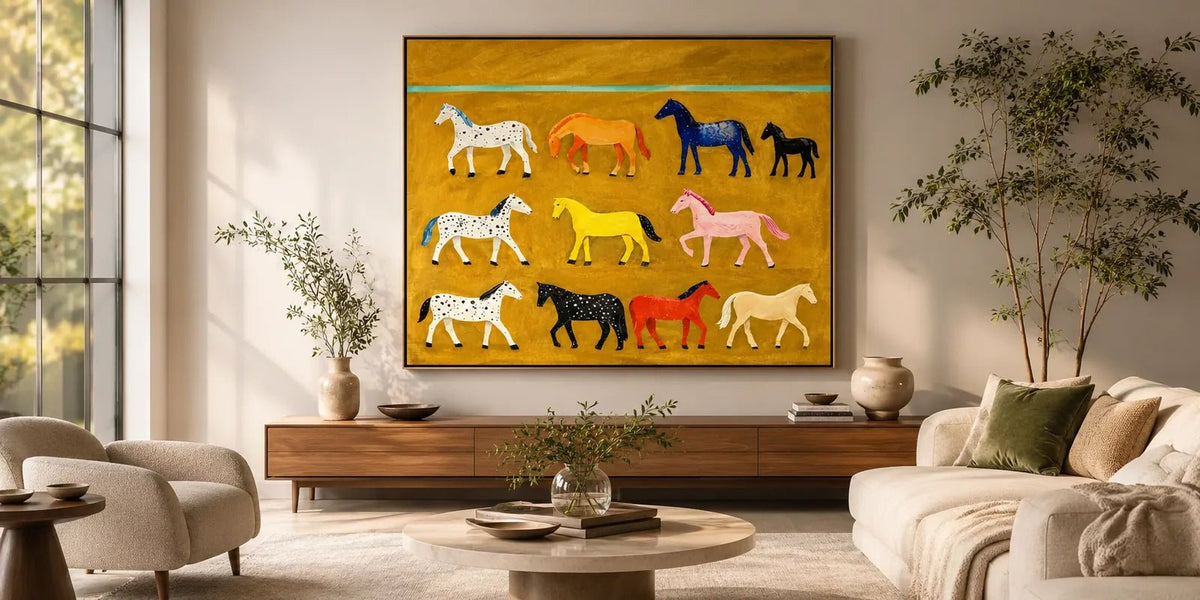
Colorful horse artwork can become the main pattern in an otherwise simple room. Mustard, coral, pink, blue, green, white, and black may be repeated across several horses to create movement and variety.
When the painting contains many colors, avoid trying to reproduce every tone elsewhere. One related cushion, vessel, or textile is usually enough to connect the artwork with the room.
A simple background can keep multiple colorful figures organized. A highly detailed setting combined with many bright horses may feel much busier from a distance.

Match the Canvas Shape to the Horse Composition
The direction of the animal should guide the format more than a general preference for horizontal or vertical art.
| Horse Composition | Suitable Format | Typical Placement |
|---|---|---|
| Horse head or shoulder portrait | Square or vertical | Entryway, office, or compact feature wall |
| Standing full-body horse | Vertical or square | Narrow wall or above a console |
| Running horse or herd | Wide horizontal | Above a sofa, bed, or sideboard |
| Horse-and-rider narrative | Square or horizontal | Living room, dining room, or office |
| Minimal elongated horse | Vertical | Tall wall, reading corner, or beside furniture |
| Colorful group of horses | Square or large horizontal | Main feature wall |
A running horse needs visible space in front of its movement. If the body nearly touches the edge of a narrow canvas, the image may feel compressed. A standing horse can use a taller format because the legs and neck already create a vertical line.
A close horse portrait can appear substantial in a square format, even when the canvas is not especially wide. A herd requires more horizontal room because the relationship between the animals is part of the subject.
Above furniture, compare the overall weight of the image with the width below it. A wide scene generally connects more naturally with a long sofa, while an upright horse may suit a smaller console or a wall between windows.
Viewing distance also matters. Fine details in the mane, tack, clothing, or landscape are easier to notice from nearby. Across an open room, a clear silhouette and stronger separation between the horse and background will remain more visible.
When you are still deciding whether the room needs a horse subject or a broader animal theme, Animal Art and All Paintings can be used as reference points before settling on the final direction.
Consider Color, Texture, and Available Wall Space
Texture can reinforce the physical structure of a horse. Brushwork following the mane or tail can suggest movement, while thicker paint around the body brings the animal forward from the background.
In a neutral piece, tonal layering helps separate the head, neck, legs, and surrounding space. Several related shades of brown, cream, gray, olive, or black can define the horse without relying on bright contrast.
Warm earth tones work naturally with leather, walnut, oak, linen, and woven fabrics. Black-and-white or gray horse paintings can feel more graphic, particularly against warm white walls. Muted green and blue backgrounds can soften western imagery and make it easier to combine with contemporary furnishings.
The amount of open wall around the painting affects how dense the work feels. A large canvas with one horse and a quiet background may appear calmer than a smaller scene filled with several riders, animals, and landscape elements.
Side lighting reveals raised brushwork and small shadows. Frontal light produces a more even appearance. Before choosing a heavily textured piece, look at the wall during both daytime and evening to see how the surface will be lit.
Room use should also guide the level of detail. Living rooms often need a composition that reads clearly from a distance. Offices and reading areas can support closer portraits or finer brushwork. Bedrooms generally benefit from a restrained palette or open background, although the artwork does not have to be pale.
Compare Horse Artwork Before Choosing
Start with the type of presence the room needs. A single standing horse feels steady. A herd introduces rhythm. A rider scene suggests a narrative, while a minimal or surreal figure places more emphasis on shape and atmosphere.
Then compare the wall itself:
- Is it wide or tall?
- Will the artwork be seen from nearby or across the room?
- Does the room already contain strong patterns?
- Should the horse feel calm, active, playful, or dramatic?
- Is the background open enough for the available wall space?
The current Horse Paintings page provides a focused starting point for viewing the available horse-centered artwork. For a wider range of rider and western narratives, Cowboy Art may offer more subjects to compare before making a decision.
Tactile Atelier’s team can help assess size, orientation, and artwork direction from wall dimensions or a room photo. Custom sizes and selected finish options may be available depending on the individual artwork, so the available choices should be confirmed before ordering.
Free standard shipping is available on eligible orders, with delivery availability confirmed for selected international destinations. Secure payment options are available. Eligible non-custom artworks may be returned within 30 days under the current return policy, while delivered custom orders are not returnable.
The right horse artwork should make sense both as an image and as part of the room. Pose, direction, figure count, canvas shape, texture, and viewing distance will have more influence on the final result than matching a single color exactly.
FAQs
What is the difference between horse artwork and cowboy art?
Horse artwork keeps the animal as the central subject, whether it appears alone, in a herd, or in a simplified composition. Cowboy art usually gives more attention to riders, ranch settings, clothing, and western narratives.
Can a large horse painting work in a small room?
Yes. A larger piece can work when it has a clear silhouette, a restrained background, and enough empty wall around it. Dense herd scenes or detailed rider landscapes may feel heavier in the same space.
Is a horse portrait or full-body composition easier to place?
A close portrait is often easier to place on square or narrower walls. A full-body horse needs enough space around the legs and direction of movement, so the shape of the wall should guide the choice.
```


Leave a comment
This site is protected by hCaptcha and the hCaptcha Privacy Policy and Terms of Service apply.