









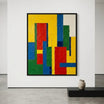


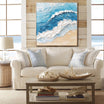

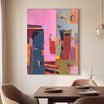
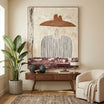
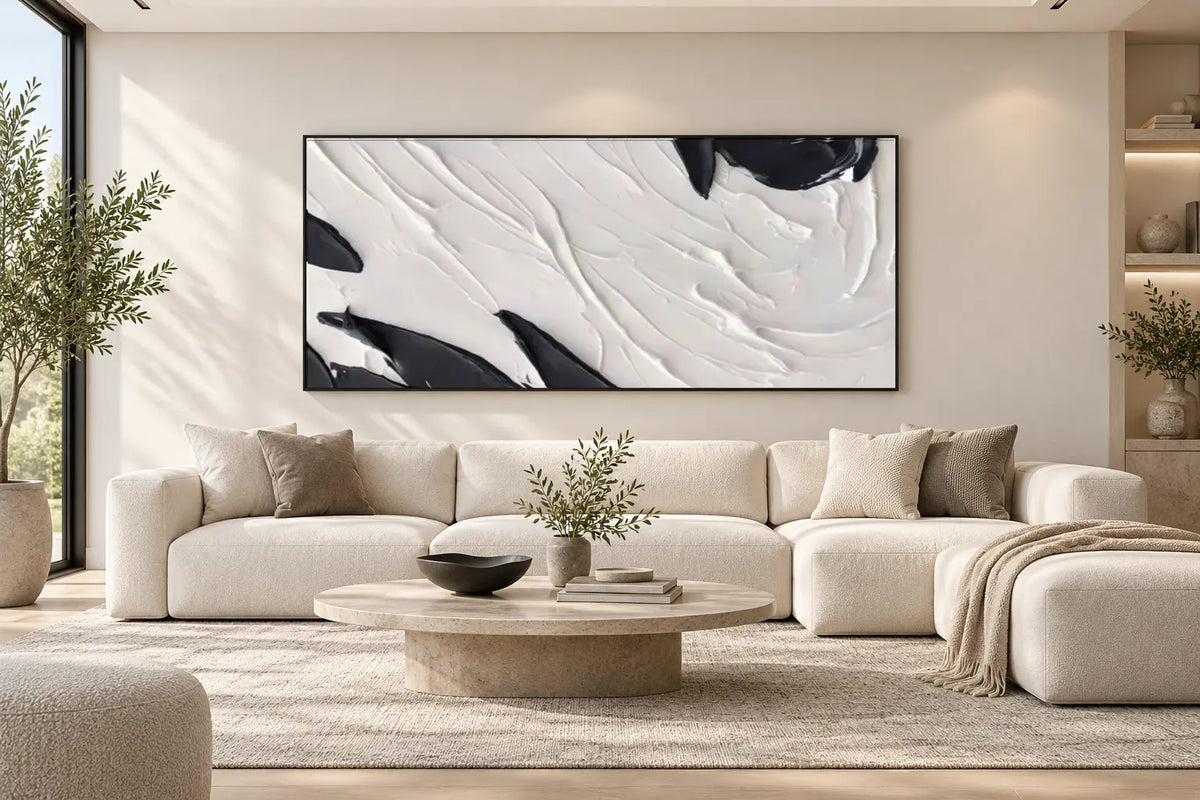
Oversized wall art can make a room feel complete, but size alone does not create impact. The right piece must relate to the wall, the furniture, the viewing distance, and the amount of visual weight already present in the room.
A large canvas should look intentional rather than squeezed into place. It needs enough scale to command attention and enough negative space to remain visually comfortable.
The key is to evaluate physical dimensions and perceived weight separately.
What Counts as Oversized Wall Art?
There is no single measurement that makes an artwork oversized. A piece is oversized when it occupies a substantial percentage of its available wall or becomes one of the dominant visual elements in the room.
A 48-inch canvas might feel oversized in a bedroom but modest on a double-height living-room wall. Context determines scale.

Oversized wall art generally has one or more of these characteristics:
- It spans a significant portion of the wall
- It relates closely to the width of a large piece of furniture
- It can be viewed clearly from across the room
- It acts as the primary focal point
- It reduces the need for several smaller decorative objects
Large art is not only for large rooms. A carefully selected statement piece can make a compact room feel more coherent by replacing visual clutter with one clear focal point.
Measure the Usable Wall, Not the Entire Wall
Begin by measuring the uninterrupted area available for art.
Exclude:
- Doors and windows
- Built-in shelving
- Wall lights
- Thermostats and switches
- Tall plants
- Furniture that overlaps the visual field
- Architectural trim that defines a separate wall section
The remaining space is your usable wall area.
Record the width and height, then mark the proposed artwork dimensions with painter’s tape. View the outline from the doorway, the primary seating position, and the opposite side of the room.
This simple test reveals whether the proposed size feels balanced before you commit.
Relate the Artwork to the Furniture
When oversized wall art hangs above furniture, the furniture becomes its visual anchor.

As a starting point, the artwork may occupy approximately two-thirds to three-quarters of the furniture’s width. This is a flexible design guideline, not a fixed rule.
For example, above a 96-inch sofa, an artwork or complete arrangement around 64 to 72 inches wide often feels connected to the seating area. A narrower piece may still work if it has substantial texture, contrast, or framing.
Keep the artwork visually centered over the furniture rather than automatically centered on the entire wall. If the sofa or console is off-center, the art usually needs to follow the furniture grouping.
Before finalizing width, also decide whether the wall requires a landscape or portrait composition. The distinction between horizontal vs vertical wall art affects how the same dimensions will be perceived.
Physical Size and Visual Weight Are Different
A large pale artwork can feel quieter than a smaller dark painting.

Visual weight increases with:
- Dark or saturated colors
- Strong contrast
- Dense compositions
- Thick impasto or sculptural texture
- Heavy frames
- Large central forms
- Sharp geometric boundaries
Visual weight decreases with:
- Light neutral colors
- Open compositions
- Soft transitions
- Fine lines
- Large areas of negative space
- Slim or frameless presentation
This distinction matters when choosing art for a furnished room. If the space already contains dark cabinetry, patterned rugs, heavy curtains, or multiple statement objects, an equally dense oversized painting may overwhelm it.
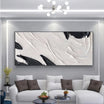
A lighter or more open composition can provide the necessary physical scale without adding excessive visual pressure. The same principle applies to black wall art, where tone and contrast can make an artwork appear more dominant than its listed dimensions suggest.
Preserve Negative Space
Negative space is the open wall surrounding the artwork. It gives the eye a place to rest and makes the boundaries of the piece easier to understand.
Oversized art should not appear trapped between the ceiling, adjacent walls, windows, or furniture.
Check four areas:
- Space above the artwork
- Distance from furniture below
- Clearance on both sides
- Separation from nearby decorative objects
The exact amount of space depends on the room, but it should look deliberate from the main viewing position.
If the artwork nearly touches every boundary, it may feel more like wall covering than a framed focal point. That effect can be intentional, but it should be planned rather than accidental.
Consider Viewing Distance
The farther the viewer stands from the wall, the more scale the artwork can support.
A large living room, open-plan interior, or long entryway may require a substantial piece because it is first seen from a distance. A narrow hallway or small bedroom provides a much closer viewing position, so the same canvas can feel dramatically larger.
Texture also changes with viewing distance. From across a room, broad shapes and tonal contrast establish the composition. At close range, layered brushwork and surface detail become more visible.
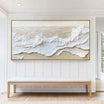
A work such as Textured Nature Wall Art is suited to this type of layered viewing experience: its wide composition establishes a strong statement from a distance, while the hand-painted texture rewards closer inspection.
When evaluating a large artwork online, do not rely only on close-up product images. Compare the dimensions with your actual viewing distance.
Choose the Right Composition
Not every image becomes more successful when enlarged.

Oversized formats tend to work well when the composition has:
- A clear focal area
- Strong large-scale shapes
- Controlled color relationships
- Intentional negative space
- Details that remain meaningful at a larger size
- Movement that suits the canvas proportions
An image with too many small, equally important elements can become visually noisy when enlarged. Conversely, a composition that is too sparse may feel empty unless texture, color, or material provides enough presence.
Wide landscapes and panoramic abstractions often suit broad walls. Tall botanical, figurative, or architectural subjects can work well on high or narrow walls.
Let One Element Lead
A room becomes overwhelming when too many objects compete for attention.
If the artwork is the focal point, allow supporting elements to remain quieter. Consider simplifying:
- Cushions and throws
- Shelf styling
- Tabletop accessories
- Window treatments
- Nearby wall décor
- Highly patterned rugs
This does not mean the room must be minimal. It means the visual hierarchy should be clear.
Collections at Tactile Atelier often rely on texture and restrained composition to create presence. In a room with this kind of artwork, natural materials and repeated neutral tones can connect the painting to the interior without competing with it.
Oversized Wall Art by Room
Living Room
Above a sofa, the artwork should feel connected to the seating arrangement. Measure the sofa, confirm the usable wall width, and view the proposed outline from the main entrance to the room.
For a wall without furniture, use a console, bench, floor lamp, or rug to visually anchor the art.
Bedroom
A large horizontal canvas above the headboard can unify the bed wall. Avoid placing the lower edge so high that the painting appears disconnected from the bed.
In a compact bedroom, consider a visually light composition so the artwork adds scale without making the room feel crowded.
Dining Room
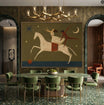
Dining rooms can support bold artwork because the wall is often viewed from several positions. Check how the piece appears both when entering the room and when seated at the table.
If the artwork hangs above a sideboard, treat the two elements as a single visual arrangement.
Entryway
An oversized piece can give an entry immediate identity. However, narrow circulation space creates a close viewing distance, so texture and surface finish will be especially noticeable.
Office
Large art can provide a strong background without requiring numerous small decorative objects. Choose a composition that supports concentration and does not create distracting glare or contrast.
Should You Use One Large Piece or a Gallery Wall?
Choose one oversized artwork when you want:
- A clear focal point
- A calmer visual field
- Faster installation
- Stronger impact from a distance
- A composition that can stand on its own
Choose a gallery wall when you want:
- Multiple personal stories
- Variety in subject and format
- A more collected appearance
- Flexibility to add or replace pieces
- A solution for an irregular wall
A gallery wall requires more coordination. One large work can be simpler, but it leaves less room for measurement errors.
How Large Is Too Large?
An artwork may be too large if:
- It touches or nearly touches adjacent boundaries
- The furniture below appears visually crushed
- Important parts of the image cannot be understood from the normal viewing position
- The room has no remaining visual resting area
- Doors, curtains, or lighting overlap it
- The piece dominates every other feature unintentionally
Before downsizing, consider whether the actual problem is excessive visual weight. A lighter composition at the same dimensions may solve the issue more effectively than a smaller but denser painting.
For subject-specific examples of how large work can remain balanced, this guide to large western wall art examines scale in relation to modern interiors.
Common Oversized Wall Art Mistakes
Guessing the Size
Measurements that sound large can look surprisingly modest on an open wall. Use painter’s tape or paper templates.
Hanging the Artwork Too High
The piece should relate to the furniture or viewing area below it. Excessive height creates visual separation.
Ignoring the Frame
A frame adds to the final width, height, and visual weight. Use the finished outer dimensions when planning.
Choosing Scale Without Considering Color
Dark, high-contrast art generally feels larger and heavier than light, low-contrast art.
Adding Too Many Competing Objects
If the art is intended to lead, give it a clear visual field.
Using a Small Artwork on a Large Wall and Calling It Minimal
Minimalism still requires proportion. Too-small art often looks accidental rather than restrained.
Frequently Asked Questions
Does oversized wall art make a room look smaller?
Not necessarily. One well-proportioned large artwork can make a room feel more organized than several small pieces. It becomes overwhelming when the dimensions, visual weight, or surrounding objects compete with the available space.
Can oversized art work in a small room?
Yes. Choose a composition with controlled contrast and sufficient negative space, and avoid crowding it with other decorative elements.
How wide should wall art be above a sofa?
Approximately two-thirds to three-quarters of the sofa’s width is a useful starting range. Adjust for the artwork’s visual weight, orientation, and the open wall around it.
How high should oversized wall art hang?
When hanging above furniture, a gap of roughly 6 to 10 inches often creates a visual connection. The correct distance depends on the furniture height, ceiling, artwork size, and normal viewing position.
Should oversized art be framed?
Either approach can work. A frame adds definition and visual weight, while a frameless or gallery-wrapped presentation can feel lighter and more contemporary. Include the frame in all final measurements.
Final Takeaway
The right oversized wall art is large enough to establish a focal point but controlled enough to leave the room visually comfortable.
Measure the usable wall, relate the artwork to nearby furniture, test the dimensions at the normal viewing distance, and evaluate visual weight separately from physical size. When scale, composition, and negative space work together, an oversized artwork can make the entire room feel more intentional.


Leave a comment
This site is protected by hCaptcha and the hCaptcha Privacy Policy and Terms of Service apply.