
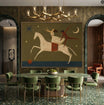
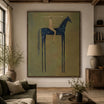

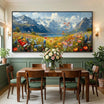
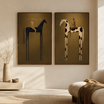
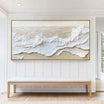
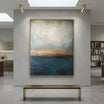
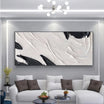
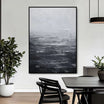
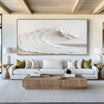
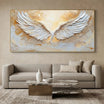


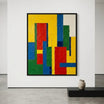
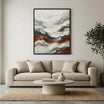

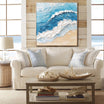
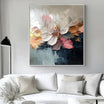
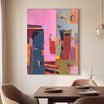
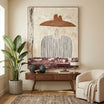

Square wall art works best when the wall already has a clear visual center. Because its height and width carry similar visual weight, a square painting tends to feel stable and self-contained rather than stretching the eye in one direction.
That makes it particularly useful above centered furniture, around symmetrical architectural features, or within clearly defined sections of wall.
The key question is not simply whether you like a square painting. It is whether the shape of the artwork responds naturally to the shape of the space around it.
Why Square Wall Art Feels Different
Artwork orientation changes the way the eye reads a wall.
A panoramic painting emphasizes width. A vertical painting draws attention upward. A square painting does neither strongly, so attention tends to stay closer to the center of the composition.
This creates two useful qualities:
- A strong central focal point
- Balanced visual weight from side to side and top to bottom
For that reason, square artwork often works particularly well when the surrounding wall area already feels contained rather than extremely wide or narrow.
If you are specifically browsing this format, the square wall art collection is useful for comparing how different subjects and textures behave within the same proportions.
Above a Console, Dresser, or Similar Furniture

A console table, dresser, or compact sideboard creates a natural visual base for square artwork.
The furniture gives the painting something to relate to, while the artwork establishes a central point above it. This combination is especially effective when the furniture does not occupy the full width of the wall.
The painting does not need to mirror the width of the furniture. In fact, leaving visible wall space around a square piece often helps its balanced proportions feel more deliberate.
This arrangement works well in:
- Entryways
- Bedrooms
- Dining areas
- Hallways
- Living-room transition spaces
The important factor is that the furniture and artwork read as one composition rather than two unrelated objects.
If the surface below already contains lamps, books, ceramics, or decorative objects, one square painting can also provide a cleaner focal point than a group of several smaller artworks.
Above a Fireplace or Mantel
A fireplace already creates a strong architectural center, which makes it one of the most natural places for square wall art.
The equal proportions of the artwork can reinforce the centered structure below it without attempting to fill the entire width of the room.
Before choosing a piece, pay attention to the actual wall area above the mantel. A painting that feels substantial in a product image may look much smaller once placed over a broad fireplace.
The goal is to let the artwork hold the center confidently while preserving enough surrounding space for the composition to breathe.
Square abstract, floral, landscape, and textured paintings can all work here. The subject is secondary to the relationship between the artwork, mantel, and wall.
In a Defined Section of Wall
Some of the best locations for square art are not large blank walls at all.
A wall section between two windows, between a doorway and built-in cabinetry, or beside shelving may already create a roughly balanced visual zone.
Square artwork can fit naturally into these areas because it does not need a long horizontal run or a tall narrow surface to feel complete.
This can be particularly useful in homes with open layouts, multiple windows, built-ins, or architectural details that divide one large wall into smaller usable areas.
Rather than treating the entire wall as one decorating problem, look for the boundaries the room already provides.
Above a Compact Sofa or Loveseat

Square artwork can also work above seating, but proportion matters more here.
A substantial square piece above a loveseat or compact sofa can create a strong centered focal point. The artwork feels connected to the seating area without needing to match the furniture's exact width.
Problems usually appear when the sofa becomes much wider than the painting.
A small square artwork centered above a long sectional may feel isolated because the furniture creates strong horizontal movement that the artwork cannot visually answer.
In that situation, you have several options:
- Choose a larger square painting
- Use a wider artwork
- Build a multi-piece arrangement
Do not choose by shape alone. Compare the visual weight of the painting with the furniture below it.
A piece such as floral abstract wall art shows how a square format can still create presence through composition, contrast, and dimensional surface detail.
How Large Should Square Wall Art Be?
Square artwork does not require a special sizing formula, but it does need enough presence to feel intentional.
Start by looking at the usable wall area rather than the total dimensions of the room.
Ask:
- What furniture sits below the painting?
- Where do doors or windows begin?
- How much empty wall will remain around it?
- From where will the artwork usually be viewed?
A square painting may work beautifully when its edges sit comfortably inside a defined section of wall. The same piece may feel too small if moved onto a wide, uninterrupted wall.
Before ordering a large artwork, marking its approximate dimensions with painter's tape can help you judge the scale from your normal viewing position.
The objective is not to fill as much wall as possible. It is to give the artwork enough visual presence without crowding the surrounding architecture.
When a Large Square Painting Makes Sense

A large square piece is particularly useful when you want one strong focal point rather than several smaller objects competing for attention.
It can work well on a tall, broad wall where there is enough space in both directions.
Unlike multiple smaller artworks, one large square painting creates a contained visual statement. This can be especially effective in interiors with simple furniture and limited decorative clutter.
Surface detail can strengthen that effect without requiring stronger color. Raised brushwork and dimensional texture react to changing light, giving a restrained composition more presence.
If texture is an important part of your decision, the existing textured wall art guide explains how surface depth and lighting affect the way artwork reads in a room.
When Square Wall Art Is Not the Best Fit
Square art is versatile, but some spaces naturally favor another orientation.
A Very Long Wall
A square painting may leave excessive unused space on either side, particularly above a long sofa, dining table, or sideboard.
A wide or panoramic composition may connect more naturally with the architecture.
A Tall, Narrow Wall
A vertical painting often follows the available proportions better and can make use of height without feeling squeezed between nearby architectural features.
Very Wide Furniture
If the artwork is much narrower than the furniture beneath it, the two can appear visually disconnected.
A larger square may solve the problem, but sometimes a horizontal format is simply the stronger choice.
A Wall That Already Has Strong Horizontal Lines
Long shelving, a wide headboard, or an extended console can create so much horizontal movement that another wide element feels more coherent than a centered square.
The point is not that square artwork cannot work in these spaces. It is that another format may respond to the architecture more naturally.
Choose the Artwork After You Choose the Shape
Once you know a square format suits the wall, you can focus on the artwork itself.
Consider Visual Weight
Two square paintings of exactly the same dimensions can feel completely different.
A dark, high-contrast composition may command more attention than a pale neutral one. A heavily textured surface may feel more substantial than a quieter painting.
Choose the amount of visual weight according to the room around it.
Look at Color Relationships
The artwork does not need to match the furniture exactly.
Instead, look for colors that either connect with materials already in the room or create deliberate contrast.
A quiet room may support a stronger color statement. A room with patterned fabrics, sculptural furniture, or bold materials may benefit from a calmer palette.
Pay Attention to Texture
Texture can give square artwork additional depth without changing its proportions.
Because square compositions are naturally contained, visible brushwork or raised surface detail can add movement while the overall shape still feels balanced.
Let the Wall Tell You Whether Square Is Right
The best location for square wall art is usually a space that already has a natural center.
A console, dresser, fireplace, compact seating area, or defined section between architectural features can all provide that structure.
On very wide or very narrow walls, another orientation may create a stronger relationship with the room.
Instead of starting with a painting and trying to make the wall fit it, start with the proportions of the space. Once you understand where the visual boundaries are, choosing the artwork becomes much easier.
You can explore different hand-painted formats through Tactile Atelier and compare how square, horizontal, vertical, and panoramic compositions respond to different wall shapes.


Leave a comment
This site is protected by hCaptcha and the hCaptcha Privacy Policy and Terms of Service apply.