
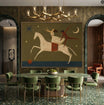
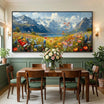
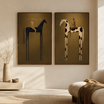
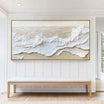
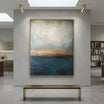
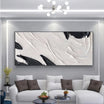
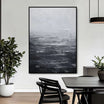
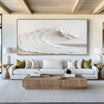
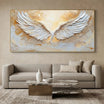

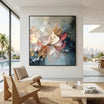
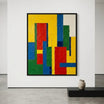
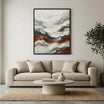
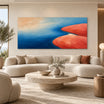
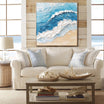
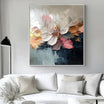
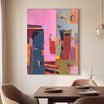
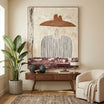

Large wall art for a dining room should relate to the entire dining arrangement, not simply fill an empty section of wall. The length and shape of the table, the position of a sideboard, the room’s main sightline and the height of the lighting all affect what will feel balanced.
A canvas may fit the wall but still look too small beside a long table. It may be correctly centered on the wall yet appear misaligned with the furniture. Artwork can also lose its impact when chair backs, pendant lights or tall table decorations interrupt the view.
At Tactile Atelier , we recommend defining the visual center of the dining area before deciding on size, orientation or color. This makes it easier to choose artwork that belongs to the room rather than one that merely occupies it.

Decide What Should Anchor the Artwork
The most suitable dining room wall usually has a direct visual relationship with the table or storage furniture.
Above a Sideboard or Buffet
A sideboard creates a clear base for the artwork and makes the size easier to judge. The painting should be wide enough to feel connected to the furniture without extending awkwardly beyond it.
Before measuring, decide which objects will remain on the surface. Table lamps, tall vases and branches may overlap the lower part of the painting. If the sideboard already carries several decorative objects, choose artwork with an open lower section or keep the surrounding styling restrained.
A low sideboard leaves more vertical wall space and may support a taller canvas. A tall buffet or cabinet usually needs a shallower composition.
Behind the Dining Table
Artwork can sit behind the dining table when the wall is unobstructed and visible from the main entrance. This arrangement works particularly well when the table is the room’s dominant feature.
Check the view with the chairs both occupied and unoccupied. High chair backs may conceal the bottom of the canvas, while a large pendant light can interrupt its center when seen from the doorway.
The artwork should remain readable from the opposite side of the table. Fine details that look appealing from close range may disappear when viewed across a wide dining area.
On an Unfurnished Wall
A large blank wall can hold a substantial painting even without furniture beneath it, but the position should still relate to the dining zone.
Use the table, rug or ceiling fixture to identify the center of the arrangement. Avoid placing the artwork halfway between the dining area and an adjacent doorway simply because that point is the mathematical center of the wall.

Should Dining Room Art Be Centered on the Wall or the Furniture?
In most dining rooms, artwork should align with the feature it visually belongs to.
Above a sideboard, center the painting on the furniture unless an architectural feature makes that relationship look unbalanced. Behind a dining table, use the full dining arrangement—including the table and chairs—as the primary reference.
Centering artwork on the wall is more appropriate when the wall is uninterrupted and functions as an independent feature. Even then, check whether the result still feels connected to the table when viewed from the entrance.
Asymmetrical rooms require more judgment. A doorway, window or tall cabinet may shift the usable painted area to one side. In this situation, center the artwork within the usable wall zone rather than the wall’s complete architectural width.
The aim is visual connection, not perfect mathematical symmetry.
How Large Should Dining Room Wall Art Be?
When artwork hangs above a sideboard, a width of roughly two-thirds to three-quarters of the furniture width provides a useful starting point.
For example, above a 72-inch sideboard, begin by testing artwork approximately 48 to 54 inches wide. Adjust that range for lamps, nearby doors and the amount of open wall on each side.
When there is no furniture directly beneath the painting, compare its dimensions with the dining arrangement as seen from the main entrance. A canvas that appears substantial when viewed up close may still feel too small across a long table.
Measure the usable wall area after accounting for curtains, door frames, switches, sconces and cabinets. The artwork needs visible space around it; a canvas that nearly touches surrounding features will feel constrained.
Before ordering from the Large Wall Art collection, test the proposed dimensions with painter’s tape or removable paper. Check the outline from the entrance and from both ends of the table.

Match the Format to the Table and Wall
A rectangular table usually establishes a strong horizontal line. Wide horizontal artwork follows that direction and can visually connect the table, chairs and wall.
Panoramic art works well with an unusually long table or sideboard, but it requires a broad, uninterrupted wall. It should not be squeezed between a cabinet and a doorway simply to match the furniture length.
A round dining table creates a more concentrated arrangement. Square artwork or a moderately proportioned horizontal canvas may suit it better than an extremely wide panoramic piece. The wall shape still matters, but the artwork does not need to imitate the table literally.
Vertical artwork is useful on narrow wall sections beside a doorway, display cabinet or window. It can contribute to the dining room without competing with the primary wall.
Choose the format that connects the furniture with the architecture. The table shape is a useful reference, not an automatic rule.
Consider Dining-Room Sightlines
Dining room artwork is seen from more positions than artwork in many other rooms.

Start at the entrance. The painting should help identify the dining area and should not appear shifted toward unrelated furniture.
Next, sit in different chairs. Check whether the main subject or most important area remains visible above chair backs, flowers, candles and serving pieces.
In an open-plan interior, also examine the artwork from the kitchen or living room. Large forms and clear tonal relationships usually remain more readable at a distance than small, intricate details.
If the dining table is used for both meals and work, consider how the canvas feels during longer periods of close viewing. A highly active composition may suit an occasional dining room but feel distracting in a space used throughout the day.
Coordinate Artwork With Dining Materials
The artwork does not need to repeat every color in the dining room. A more natural connection usually comes from one shared undertone or material relationship.
Warm wood tables can work with ochre, clay, muted green, brown or warm neutral paintings. Dark walnut may support deeper tones, while pale oak often pairs comfortably with softer, lower-contrast palettes.
Look at upholstered chairs and the rug as larger color surfaces. These elements matter more than small table accessories that change seasonally.
Metal finishes also affect the result. Black lighting can connect with darker marks in a painting, while brass or warm metal may relate to ochre, sand or muted gold tones. These links should remain subtle rather than making every element match.
Hand-painted texture can add surface variation to a dining room containing smooth tables, glass, ceramics or simple upholstery. Under side lighting, raised areas create small changes in highlight and shadow without requiring stronger color.
Browse Dining Room Art by considering the table, chair upholstery, rug and lighting together rather than judging the painting against the wall color alone.
Check the Lighting Before Installation
Pendant lighting can compete with artwork when both occupy the same sightline. If the fixture is visually complex, a painting with broader forms may be easier to read than one with several small focal areas.
Check for reflections from windows and glass doors. Strong frontal light can reduce visible texture, while side lighting can make raised paint more pronounced.
The evening view is particularly important in a dining room. Warm bulbs may strengthen beige, brown, ochre and red undertones, while dark artwork can appear heavier after daylight fades.
Assess the wall under the lighting normally used during meals, not only in bright daytime conditions.
Final Dining Room Checklist
Before choosing the final artwork, confirm that:
- The painting relates to the table, sideboard or dining zone.
- It is centered on the correct visual anchor.
- The size has been checked from the room entrance.
The right large artwork can give a dining room a clear center without making the space feel overdecorated. When furniture alignment, sightlines and lighting guide the decision, the painting becomes part of the dining arrangement rather than a separate object on the wall.


Leave a comment
This site is protected by hCaptcha and the hCaptcha Privacy Policy and Terms of Service apply.