
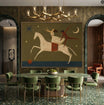
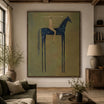
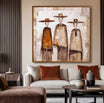
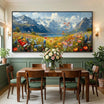
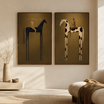
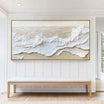
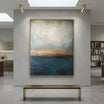
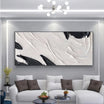
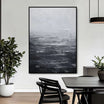
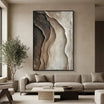
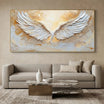


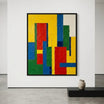
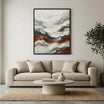
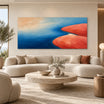
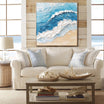
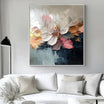
Choosing minimalist wall art is not about leaving a room empty. It is about choosing artwork with intention. In a low-saturation, modern space, every line, color, texture, and proportion matters. The right piece can make a wall feel complete without making the room feel busy.
For people who prefer clean interiors, soft palettes, and quiet visual balance, minimalist artwork can be one of the most useful design choices. It can add structure to a blank wall, soften a room with subtle texture, or create a calm focal point above a sofa, bed, sideboard, or desk.
This guide will help you choose minimalist art by size, placement, color, texture, and room fit, so the final result feels calm rather than unfinished.

Why Minimalist Wall Art Works in Modern Interiors
Minimalist wall art works well in modern interiors because it supports the room without overwhelming it. Instead of relying on complicated imagery or loud color, minimalist artwork often uses open space, restrained composition, tonal contrast, and subtle surface detail.
This makes it especially suitable for homes with simple furniture, neutral walls, clean architectural lines, and natural materials. A minimalist painting can make a space feel finished while keeping the overall mood quiet. It can also help connect different parts of a room, such as a sofa and coffee table, a bed and bedside lamps, or a dining table and sideboard.
The key is balance. Minimalism does not mean the artwork should disappear. A piece that is too small, too pale, or too plain may feel accidental. A piece that is too bold may interrupt the calm of the room. The best choice usually sits between those two extremes: enough presence to hold the wall, enough restraint to preserve the atmosphere.
Hand-painted texture can be especially effective in minimalist spaces. When the palette is soft and the composition is simple, real surface detail gives the artwork depth without adding visual clutter.

Choose the Right Size Before Choosing the Style
Size should come before style. Many minimalist rooms look simple, but their proportions are carefully considered. If the artwork is the wrong size, even a beautiful piece can feel out of place.
Start with the wall. Is it narrow, wide, tall, or open? Then look at the furniture below or near it. Artwork should feel visually connected to that furniture, not floating by itself. A large blank wall usually needs a larger artwork or a balanced arrangement. A compact wall may need something quieter with enough breathing room around it.
Above a sofa, minimalist wall art should usually relate to the width of the seating area. A horizontal canvas often works well because it follows the line of the sofa and gives the wall structure. Leave space between the top of the sofa and the bottom of the artwork so the arrangement feels relaxed rather than crowded.
Above a bed, the artwork should help frame the sleeping area. A large minimalist painting with a soft palette can bring calm to the room without making it feel decorated in a heavy way. If the bed has a tall headboard, choose a piece that leaves enough visual space between the two.
Above a sideboard, console, or credenza, the artwork can be slightly narrower than the furniture while still feeling connected. This is a useful approach for dining rooms, entryways, hallways, and offices.
One Large Piece or a Pair?
One large piece is often the cleanest choice for minimalist interiors. It creates one clear focal point and avoids making the wall feel fragmented. This works especially well above sofas, beds, and large console tables.
A pair can work when the wall is wide or when the room already uses symmetry. Two related pieces can feel calm and balanced if the colors, scale, and spacing are consistent. Avoid using too many small artworks unless the room is designed for a gallery-style look.

Color, Contrast, and Low-Saturation Rooms
Color is one of the main reasons people choose minimalist artwork. A low-saturation room may use ivory, cream, beige, gray, taupe, soft brown, muted black, stone, or off-white. The artwork should work with that palette, but it does not need to match it exactly.
A good minimalist artwork often repeats undertones from the room. If the furniture is warm beige and the flooring is light wood, a canvas with cream, taupe, sand, or muted brown can feel natural. If the room has cool stone, gray walls, or black metal accents, artwork with soft gray, charcoal, white, or muted black may feel more balanced.
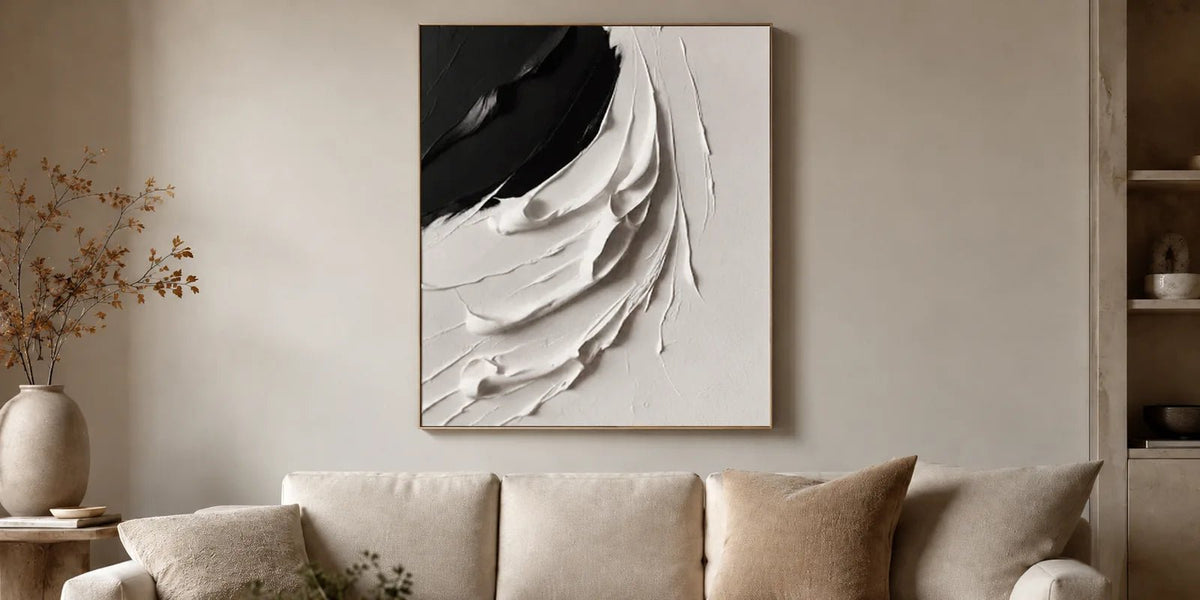
Contrast should be used carefully. In a calm room, a strong black-and-white piece can look sharp and intentional, but it may also become the most dominant element. A softer abstract painting minimalist in tone may be better if the goal is a quiet, restful room.
If the room feels too pale, choose artwork with slightly deeper marks or a stronger composition. If the room already has dark furniture, patterned textiles, or dramatic lighting, choose artwork with more open space and less contrast.
Warm Minimalism
Warm minimalism uses softer neutrals, natural woods, linen textures, ceramic surfaces, and gentle lighting. For this style, minimalist artwork in beige, ivory, taupe, clay, or muted brown often works well. Texture can add depth without making the room feel busy.
Cool Minimalism
Cool minimalism often uses white, gray, black, stone, glass, and metal. Artwork with clean lines, soft gray tones, muted black details, or a restrained abstract composition can support the room without making it feel cold.

Texture Makes Minimalist Artwork Feel Finished
Minimalist rooms can sometimes feel unfinished when every surface is smooth. This is where texture becomes important. A hand-painted canvas with real surface detail can make a quiet wall feel more complete, even when the colors are restrained.
Texture gives minimalist artwork a tactile quality. Raised marks, tonal layering, and subtle brushwork can catch light and create gentle shadow. This adds visual depth without requiring a busy composition.
A minimalist painting with texture can work especially well in rooms with natural materials. It can echo the softness of linen, the grain of wood, the irregularity of stone, or the matte finish of plaster-like walls. Rather than adding more objects to the room, one textured artwork can provide the missing layer.
The level of texture should fit the room. A bedroom may need softer texture and lower contrast. A living room or entryway can often handle more surface presence. An office may benefit from balanced texture that feels polished but not distracting.
Minimalist does not have to mean flat. In many modern interiors, the most refined minimalist artwork has depth that becomes more visible as the light changes throughout the day.
Where to Use Minimalist Wall Art
Minimalist wall art can work throughout the home, but the placement should match the function of the room.
In a living room, artwork often anchors the main seating area. A large minimalist canvas above a sofa can make the wall feel intentional while keeping the space calm. Choose a piece that relates to the sofa width, rug, coffee table, and surrounding furniture.
In a bedroom, minimalist artwork should support rest. Soft neutral tones, gentle movement, and subtle texture usually work better than strong contrast or highly active compositions. Above the bed, a single large piece or a quiet pair can frame the room without creating visual noise.
In a dining room, minimalist artwork can help balance furniture and wall space. A calm canvas above a sideboard or main dining wall can add depth while allowing the table, lighting, and materials to remain central.
In an entryway, a single artwork can set the tone for the home. Minimalist artwork works well here because it gives the space structure without making a narrow area feel crowded.
In a home office, minimalist artwork can create a more composed backdrop. A piece behind a desk or above a credenza should feel calm, balanced, and appropriate for focus. Avoid anything too visually active if the artwork will sit within a video-call background.

Minimalist, Abstract, Contemporary, and Modern Art: How to Compare
Minimalist Art, Abstract Art, Contemporary Art, and Modern Art can overlap, but each direction creates a slightly different feeling.
Minimalist Art is usually the best starting point when you want restraint, open space, low-saturation color, and a calm composition. It is useful for rooms where the artwork should support the interior rather than dominate it.
Abstract Art may offer more movement, contrast, or expressive form. If you want a stronger focal point while still staying within a refined palette, abstract artwork can be a good direction. An abstract painting minimalist in palette and composition can also sit between both styles.
Contemporary Art often feels current and design-led. It may include bolder forms, layered surfaces, or a more defined visual statement. This can work well if your room is clean but needs a stronger point of interest.
Modern Art is a broader direction and can include many visual styles. It is useful if you are comparing artwork for modern interiors but are not yet sure whether you want minimal, abstract, or more expressive pieces.
If you are deciding between these styles, start with the room’s mood. Does the wall need quiet balance, a soft focal point, stronger contrast, or more movement? Once that is clear, it becomes easier to choose the right category.
Explore Tactile Atelier Minimalist Art
If you are choosing artwork for a calm, low-saturation interior, start with Minimalist Art. This selection is a useful place to compare scale, color, texture, and composition before deciding what the room needs.
Tactile Atelier creates hand-painted canvas art with real texture, tonal layering, and visual depth. The artworks are designed for calm, refined modern interiors where the wall should feel considered, not crowded.
Custom sizes and selected finish options may be available depending on the artwork. If you are unsure about size, format, or artwork direction, the team can help from your wall dimensions or room photo. This is especially useful for minimalist interiors, where proportion and negative space can affect the entire room.
Free global shipping, free and fast delivery, secure payments, and a 30-day risk-free return policy help make the selection process easier.
As you compare Minimalist Art, Abstract Art, Contemporary Art, and Modern Art, think through the room in order: wall size, furniture, palette, texture level, and mood. The right artwork should feel quiet, but not weak; simple, but not empty.
Final Thoughts on Minimalist Wall Art
The right minimalist wall art can make a calm room feel complete. It should support the interior through scale, color, texture, and proportion rather than compete with everything around it.
For a low-saturation home, start with the mood you want: warm, cool, soft, structured, organic, or crisp. Then choose a size that fits the wall and furniture. From there, look for texture, tonal layering, and composition that give the artwork presence without making the room feel busy.
Minimalist artwork works best when it feels intentional. When the piece has the right balance of restraint and depth, it can bring quiet structure to a living room, bedroom, dining room, office, or entryway.
FAQs
What is minimalist wall art?
Minimalist wall art uses restraint, open space, simple composition, and often a soft palette. It can include subtle texture, tonal layering, and clean forms that support the room without making it feel busy.
What colors work best for minimalist artwork?
Ivory, beige, cream, taupe, soft gray, stone, muted brown, off-white, charcoal, and muted black often work well. Choose colors that share undertones with the room’s furniture, flooring, and lighting.
Where should I place minimalist painting in a home?
Minimalist painting works well above sofas, beds, sideboards, console tables, desks, dining walls, and entryways. Choose a place where the artwork can relate to nearby furniture and still have enough breathing room.


Leave a comment
This site is protected by hCaptcha and the hCaptcha Privacy Policy and Terms of Service apply.