
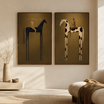
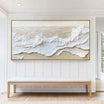
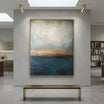
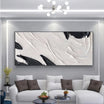
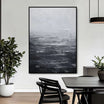
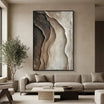



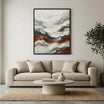
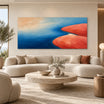
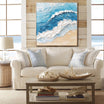
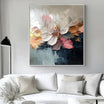
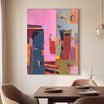
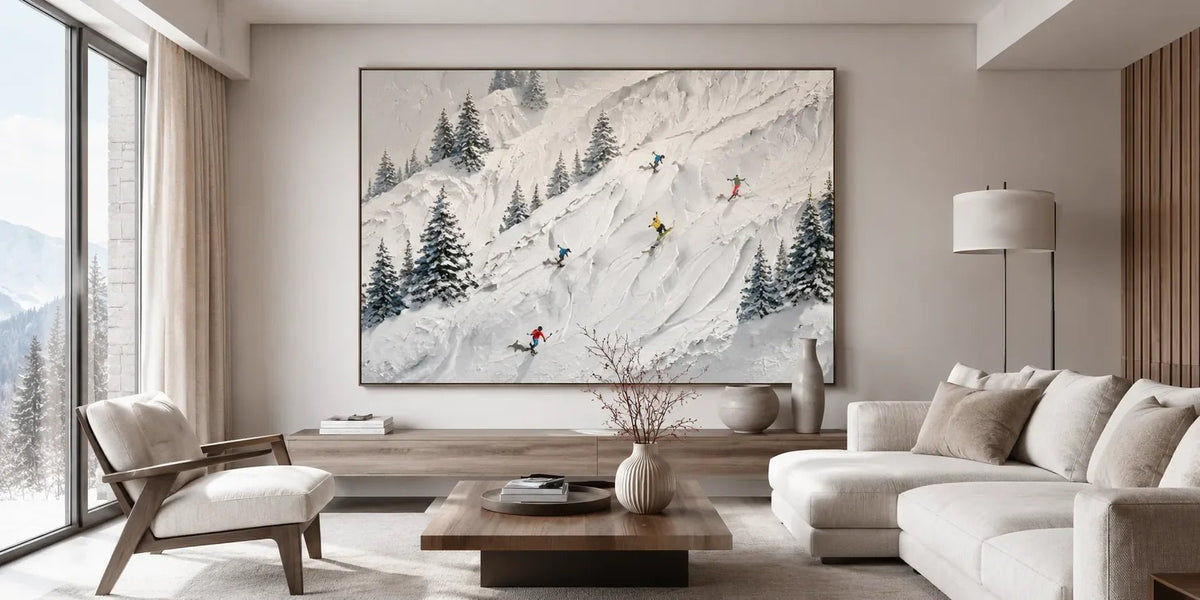
A landscape painting can give a room a stronger sense of space, whether it shows a distant mountain range, an open valley, a quiet forest, or an abstract horizon. The subject may be natural, but choosing the right piece still requires careful attention to scale, composition, color, and placement.
Start with the room rather than the artwork alone. Consider the width of the wall, the furniture below it, the main viewing distance, and the atmosphere you want the space to have. A wide, low landscape may make a living room feel more open, while a vertical mountain composition can bring structure to a narrow wall.
This guide explains how to compare landscape paintings and choose one that feels connected to the room rather than simply filling an empty space.

A landscape painting should relate to the proportions, materials, and mood of the room around it.
How to Choose a Landscape Painting by Style
Landscape art ranges from clearly recognizable scenery to compositions that use only a few colors and shapes to suggest land, sky, or water. The right approach depends on how much detail you want and how the rest of the room is furnished.
Recognizable Landscape Art
A recognizable landscape contains identifiable features such as trees, hills, coastlines, fields, mountain peaks, or built environments. It gives the viewer an immediate sense of place and can introduce a familiar scene into a living room, bedroom, dining room, or office.
Detailed scenery often works well in rooms with simple furniture and relatively quiet surfaces. Because the image already contains visual information, it does not need to compete with heavily patterned fabrics, crowded shelves, or several other focal points.
Viewing distance matters. Fine details are easier to appreciate in a hallway, reading area, or dining room where people can approach the painting. From across a large living room, broader shapes and stronger tonal divisions are usually easier to read.
Abstract Landscape Art
Abstract landscape art does not need to describe a specific location. Horizontal bands may suggest a horizon, layered shapes may resemble distant hills, and changes in tone can create the feeling of mist, water, or open land.
This approach suits modern rooms where realistic scenery might feel too literal. It also works well when you want a connection to nature without making the subject the only thing people notice.
When comparing abstract landscapes, look for the visual clues that hold the composition together. A clear horizon, repeated horizontal movement, or a gradual transition from dark foreground tones to lighter background tones can make an abstract image feel spacious rather than random.

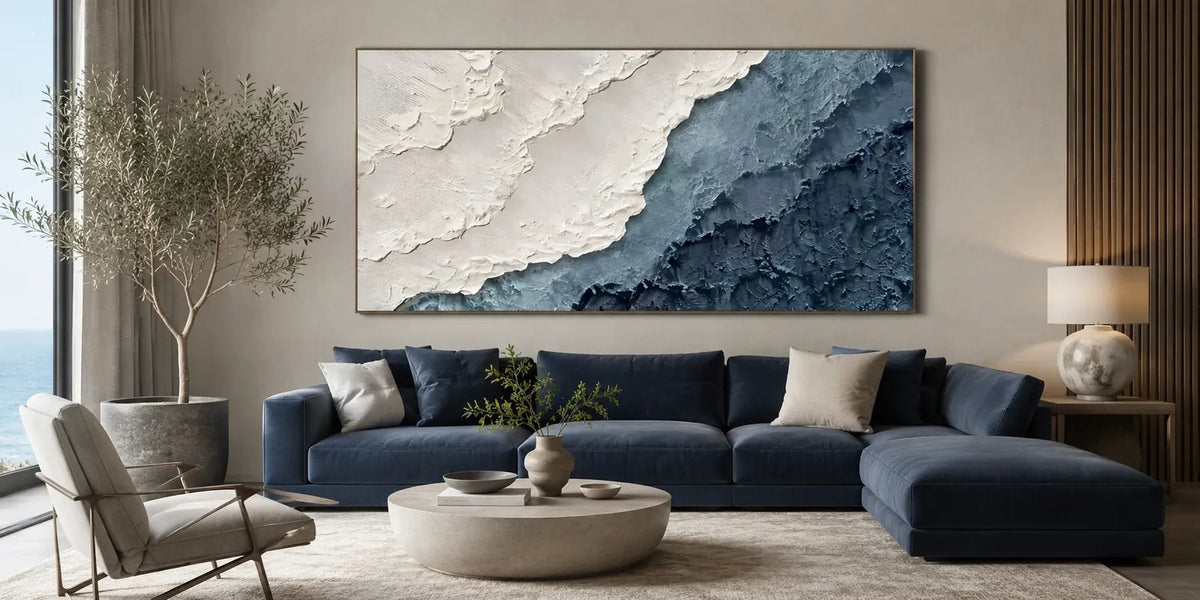
Color bands, softened edges, and tonal changes can suggest a landscape without describing a specific place.
Mountain Landscape Painting
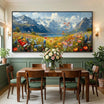
A mountain landscape painting tends to have more visual weight than an open sky or low coastal horizon. Peaks create strong upward and diagonal lines, giving the wall a sense of structure.
Soft, distant mountains can feel quiet and atmospheric. Darker slopes and sharply defined ridges create more contrast and may suit a larger room or a wall that needs a stronger focal point.
Also consider the position of the mountain range within the canvas. High peaks occupying most of the artwork feel more imposing. Mountains placed lower in the composition, with more sky above them, usually feel lighter and more open.
The Mountains & Valley selection is a useful reference when you prefer peaks, slopes, open terrain, or mountain-inspired compositions.

Mountain-inspired artwork can add height, direction, and a stronger architectural presence to a room.
Read the Composition Before Choosing the Color
Color is often the first feature people notice, but composition has a greater effect on how a landscape changes the apparent proportions of a room.
The Position of the Horizon
A low horizon leaves more room for sky and can make a composition feel open, airy, and expansive. This can be helpful in a room with heavy furniture, dark flooring, or limited natural light.
A high horizon gives greater emphasis to the land, water, or foreground. It often feels more grounded and can add substance to a large wall.
A horizon near the center creates a balanced composition, but it may also feel more formal. Look at how that central division aligns with nearby furniture, shelves, windows, or architectural lines.
The horizon does not need to match anything exactly. It should simply avoid creating an awkward visual line that competes with another strong feature in the room.
Foreground, Middle Ground, and Background
Traditional and abstract landscapes often create depth through three visual zones:
- A darker or more detailed foreground
- A middle area that leads the eye into the scene
- A softer or lighter background
This progression gives the impression of distance. It is particularly useful on a wall opposite a doorway or seating area, where the artwork is seen from across the room.
A painting with a dominant foreground can feel close and immersive. One with lighter distant forms and fewer foreground details generally feels more spacious.
For a compact room, consider artwork that allows the eye to travel into the composition. For a large room that already feels open, a stronger foreground can make the wall feel less remote.
Direction and Visual Movement
Mountain ridges, rivers, paths, cloud formations, buildings, reflections, and brushstrokes all direct the eye. Notice whether the main movement travels inward, upward, horizontally, or toward one side of the canvas.
A composition that leads inward can create depth. Strong upward movement brings attention to ceiling height, while a long horizontal line emphasizes the width of a wall.
Asymmetrical landscape art can work well, but check where its visual weight falls. A dark mountain, building, or dense group of trees on one side may look better when balanced by a floor lamp, plant, side table, or open space elsewhere in the room.

Deep tones, reflections, and vertical forms create a more structured mood than an open natural horizon.
Choose the Right Size, Shape, and Placement
Even an appealing painting can feel misplaced when its dimensions do not relate to the wall and furniture.
Artwork Above Furniture
When hanging a landscape above a sofa, bed, console, or sideboard, treat the furniture and artwork as one arrangement. The painting should be wide enough to connect visually with the piece below it without extending beyond it in an uncomfortable way.
Artwork occupying roughly two-thirds to three-quarters of the furniture width is often a useful starting point, although the surrounding wall space and room layout should guide the final choice.
Avoid hanging the painting so high that it appears detached from the furniture. Leave a clear gap, but keep the two elements visually grouped.
Before ordering, use removable tape to mark the proposed dimensions on the wall. View the outline from the doorway, main seating position, and other common angles. This simple step often reveals that a size which sounded large on paper is actually appropriate for the room.
Horizontal and Panoramic Landscapes
Horizontal landscape art follows the natural direction of a horizon. It suits wide walls and is a practical choice above sofas, beds, dining tables, and long cabinets.
A panoramic format creates an even stronger sense of width. It can visually extend a narrow living or dining room, but it needs enough uninterrupted wall space around it. Avoid squeezing a panoramic painting between tall shelves or closely placed windows.
Vertical Mountain Compositions
Vertical artwork is useful for narrow walls, stair landings, corners, and areas beside a doorway. In a mountain composition, the format can emphasize steep slopes and height.
A vertical piece may also balance low furniture in a room where everything else follows horizontal lines. However, it should not be so narrow that it appears lost on a broad wall.
Square Formats
Square landscape art has a contained, balanced shape. It works above compact furniture, between two windows, or in a room built around symmetrical arrangements.
Because the format does not strongly emphasize width or height, the composition itself becomes especially important. Check whether the landscape feels open enough inside the square or whether the subject appears crowded.
Coordinate Color, Texture, and Light
A landscape painting does not need to repeat every color already in the room. It usually looks more natural when it shares one or two undertones with the interior and then introduces related shades.
A room with cream upholstery and warm wood might suit sand, taupe, olive, ochre, or muted brown. A cooler interior may work with blue-gray, charcoal, soft green, or pale stone tones.
Look beyond the obvious color names. Two blue paintings can feel completely different if one contains cool gray undertones and the other leans toward teal or green. Compare the artwork with fixed room elements such as flooring, large furniture, curtains, and wall color rather than small accessories that are easy to change.
Contrast also has a purpose. A dark mountain or city scene can anchor a pale room, while a light, misty landscape can soften dark cabinetry or strong architectural details.
Texture in a Neutral Room
Neutral rooms do not always need brighter color. They may simply need more variation in surface and material.
Hand-painted texture creates small changes in highlight and shadow as the light shifts. Raised brushwork may be visible from across the room, while finer layers become clearer when viewed nearby.
Heavily textured art tends to have a stronger physical presence. It can suit a large wall with minimal decoration. More restrained texture works well in bedrooms, offices, and rooms where the artwork should remain quiet.
Tonal layering is equally important. Closely related shades can separate distant mountains, clouds, and foreground forms without creating harsh contrast. This gives the image dimension while preserving a controlled palette.

Layered neutral paint can create depth through texture rather than strong color contrast.
Check the Lighting at Different Times
Natural and artificial light can change both color and texture. A painting beside a window may look cooler in the morning and warmer later in the day. Side lighting can reveal raised paint, while strong direct lighting may produce unwanted glare.
Consider where lamps, ceiling lights, and windows are positioned before choosing the final location. Observe the wall at different times of day, particularly if the room receives strong natural light.
Avoid locations where constant direct sunlight may affect the artwork over time. Also check the evening view, especially in dining rooms and living rooms that are mainly used after sunset.
Finding the Right Landscape Painting at Tactile Atelier
Different rooms call for different types of scenery. A soft abstract landscape can add movement to a quiet bedroom without making it feel busy. A wide desert, valley, or forest scene can give a living room a clearer focal point. A more defined mountain composition may bring structure to an office, dining room, or tall wall.
At Tactile Atelier, the canvases are hand-painted with visible brushwork, tonal variation, and physical texture. Landscape subjects range from recognizable scenery to atmospheric abstract compositions in horizontal, vertical, square, and panoramic formats.
Abstract Art may suit rooms where color and surface matter more than a clearly defined location. Contemporary Art can work when you prefer recognizable forms interpreted with expressive brushwork, while Modern Art offers another direction for rooms based on cleaner shapes and stronger visual structure.
Custom sizes and selected finish options may be available depending on the individual artwork. Confirm the available format before ordering, particularly when working with an unusual wall width or a specific framing plan.
Free standard shipping is available on eligible orders, with international delivery confirmed according to the destination. Secure payment options and a 30-day return window are available for eligible non-custom artworks under the applicable policy terms.
When scale or orientation is difficult to judge, send the team your wall dimensions or a clear room photo. Furniture width, ceiling height, surrounding materials, and viewing distance can all help narrow the choice.
The right landscape painting should relate to the room without being limited by it. Begin with the available wall space, then compare composition, orientation, color, and texture. A piece that feels balanced from the room’s main viewing points is more likely to remain satisfying than one chosen only because its colors match a cushion or rug.
Frequently Asked Questions
What size landscape painting should I choose?
Measure both the wall and the furniture below it. Above a sofa, bed, or console, artwork measuring roughly two-thirds to three-quarters of the furniture width is a useful starting point. Mark the dimensions on the wall before making a final decision.
Does abstract landscape art suit a modern interior?
Yes. Abstract landscape art can suggest horizons, mountains, water, or open land through shape, texture, and tonal changes. It works particularly well in rooms with simple furniture and restrained materials.
Should a landscape painting match the room’s colors?
It does not need to match every color. Look for one or two shared undertones, then allow the artwork to add related shades or deliberate contrast. This usually creates a more natural result than exact color matching.



Leave a comment
This site is protected by hCaptcha and the hCaptcha Privacy Policy and Terms of Service apply.